
Professional tourism, ground handling and destination management services across Turkey.
Contact Us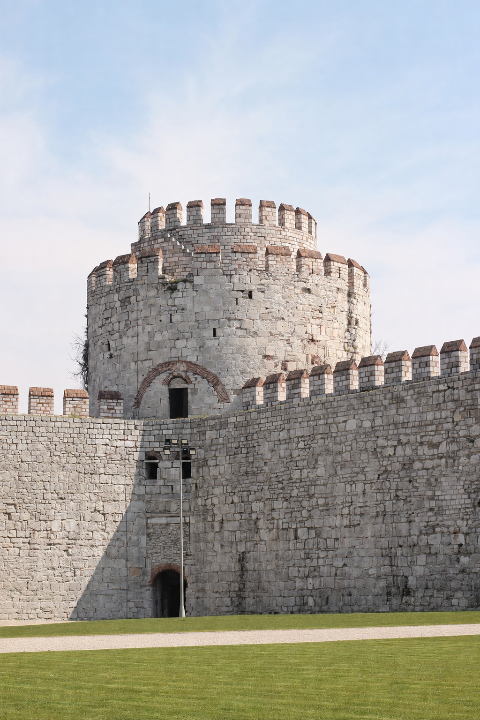
Yedikule and the Historic City Walls offer visitors an impressive journey through Istanbul’s Eastern Roman and Ottoman past. Located near the Sea of Marmara at the southern end of the historical peninsula, the area brings together monumental defensive walls, towers, gateways and one of the city’s most remarkable fortresses. The Theodosian Land Walls were constructed during the 5th century to protect Constantinople from attacks by land. Extending for several kilometres between the Sea of Marmara and the Golden Horn, the defensive system included a strong inner wall, an outer wall, numerous towers and a wide moat. For centuries, these fortifications protected the capital and became an important model for military architecture. One of the most important entrances through the walls was the Golden Gate. Originally designed as a monumental ceremonial gateway, it was used for imperial processions and triumphal entrances into Constantinople. Its large marble structure later became part of Yedikule Fortress. Following the Ottoman conquest of Constantinople, Sultan Mehmed II strengthened the area by adding new towers and walls behind the Golden Gate. Completed during the 15th century, the fortress became known as Yedikule, meaning “Seven Towers,” because its design combined earlier Eastern Roman towers with new Ottoman additions. During the Ottoman period, Yedikule Fortress served several purposes. It was used to protect part of the city, store the imperial treasury and hold important political prisoners and foreign diplomats. Because of this history, it is also widely known as the Yedikule Dungeons. The fortress’s towers, stone walls, courtyards and gateways reflect the transformation of Constantinople into Ottoman Istanbul. Walking through the complex allows visitors to observe Eastern Roman and Ottoman construction techniques within the same historical monument. Today, Yedikule Fortress and the surviving sections of the Theodosian Land Walls form one of Istanbul’s most impressive open-air historical landscapes. The Land Walls Conservation Area is part of the Historic Areas of Istanbul, inscribed on the UNESCO World Heritage List in 1985. Together, the fortress and walls reveal how the city was defended, expanded and transformed over many centuries.
Hagia Sophia is located in the heart of Istanbul’s historic Sultanahmet district, within walking distance of many of the city’s most important landmarks.