
Professional tourism, ground handling and destination management services across Turkey.
Contact Us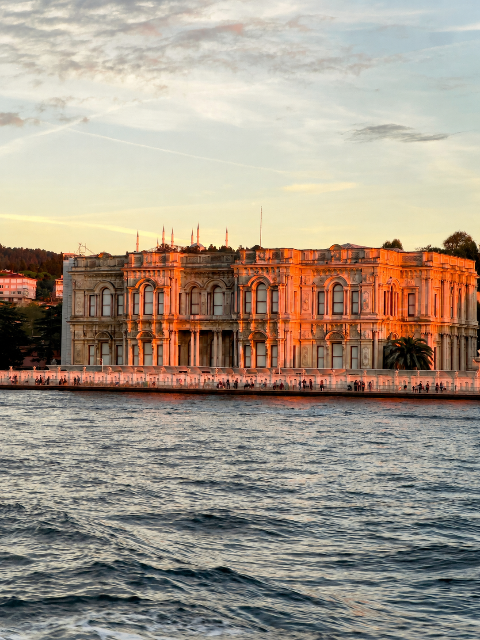
Üsküdar is one of Istanbul’s most historic and atmospheric districts, located on the Asian shore of the Bosphorus. Known for its waterfront squares, ferry piers, mosques, palaces and traditional neighbourhoods, it offers impressive views towards the historical peninsula and reflects the city’s Ottoman, religious and maritime heritage. Near the waterfront stands the Mihrimah Sultan Mosque, commissioned by Mihrimah Sultan, the daughter of Sultan Süleyman the Magnificent, and designed by Mimar Sinan. Its central location beside the ferry piers makes it one of the most recognisable landmarks of Üsküdar. Nearby, the Yeni Valide Mosque is admired for its elegant courtyard, domes, minarets and traditional Ottoman decoration. Further along the shore is the Şemsi Pasha Mosque, another work associated with Mimar Sinan. Its intimate scale and position directly beside the Bosphorus create one of Üsküdar’s most picturesque waterfront scenes. The Aziz Mahmud Hüdayi Mosque and Tomb, situated on the hillside above the centre, form an important spiritual complex connected with the influential Ottoman Sufi scholar Aziz Mahmud Hüdayi. The Üsküdar Waterfront is central to the district’s character. Ferry piers, tea gardens, cafés and walking areas provide views of the Bosphorus, the Maiden’s Tower and Istanbul’s European skyline. The shoreline continues through neighbourhoods such as Kuzguncuk, Beylerbeyi, Çengelköy, Vaniköy and Kandilli, where historic Bosphorus mansions preserve the elegant residential architecture once associated with Ottoman officials, diplomats and wealthy families. One of the most impressive buildings along this route is Beylerbeyi Palace. Constructed during the reign of Sultan Abdülaziz between 1863 and 1865, it was used as a summer residence and as a place to welcome important foreign guests. Its decorated rooms, gardens, waterfront pavilions and views across the Bosphorus reflect the splendour of the late Ottoman court. Nearby, Beylerbeyi Mosque adds another important example of Ottoman religious architecture to the neighbourhood’s historic waterfront. Above the Bosphorus rises Çamlıca Hill, one of the city’s most popular panoramic viewpoints. Its gardens, walking areas and terraces offer wide views over the Bosphorus, the Sea of Marmara and Istanbul’s skyline. The hill is also home to the Great Çamlıca Mosque, a monumental modern mosque that includes religious, cultural and educational spaces. Nearby, Çamlıca Tower represents the contemporary side of Üsküdar. Designed as a broadcasting and observation tower, it includes viewing decks, restaurants and interactive visitor areas. From its upper levels, visitors can enjoy a panoramic perspective across both the European and Asian sides of Istanbul. Further north along the Asian shore stands Anadolu Fortress, also known as Anadolu Hisarı. Built by Ottoman Sultan Bayezid I at one of the narrowest points of the Bosphorus, it later worked together with Rumeli Fortress to control movement through the strait. Close to the fortress is Küçüksu Pavilion, an elegant 19th-century imperial residence known for its richly decorated rooms, carved façades, marble fireplaces and European-influenced furnishings. Üsküdar is also connected with the history of modern nursing through the Florence Nightingale Museum. Located inside Selimiye Barracks, the museum commemorates Florence Nightingale’s work caring for wounded soldiers during the Crimean War. Its collections include photographs, documents and personal objects associated with her life and medical service in Istanbul. Because the museum is situated within an active military complex, visiting arrangements may differ from those of ordinary public museums. Together, the historic mosques, waterfront, Beylerbeyi Palace, Çamlıca Hill, Çamlıca Tower, Anadolu Fortress, Küçüksu Pavilion, Bosphorus mansions and Florence Nightingale Museum reveal the many identities of Üsküdar. Visitors can experience spiritual heritage, Ottoman court life, military history, traditional architecture and panoramic Bosphorus scenery within one of Istanbul’s most distinctive districts.
Hagia Sophia is located in the heart of Istanbul’s historic Sultanahmet district, within walking distance of many of the city’s most important landmarks.