
Professional tourism, ground handling and destination management services across Turkey.
Contact Us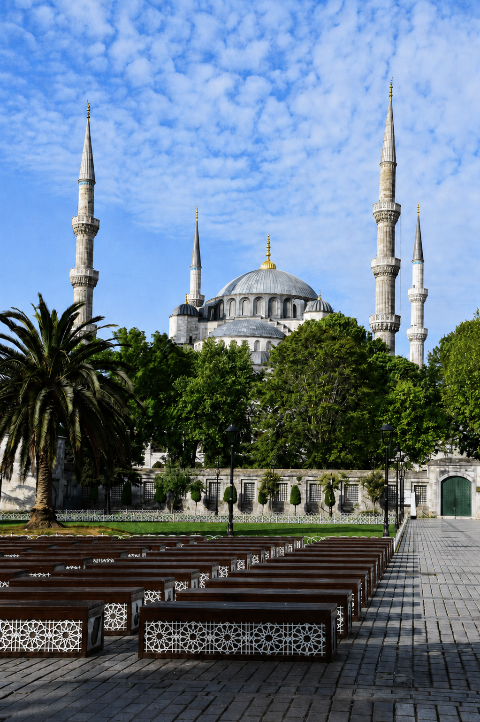
Sultanahmet Square is the historic heart of Istanbul and one of the best places to experience the city’s Eastern Roman and Ottoman heritage. Surrounded by mosques, museums, ancient monuments and underground cisterns, the area brings together many different periods of Istanbul’s history within walking distance. Much of the square occupies the site of the ancient Hippodrome of Constantinople. The Hippodrome was once used for chariot races, imperial ceremonies, celebrations and public gatherings. Although its grandstands have disappeared, several monuments from its central barrier remain standing today. The Obelisk of Theodosius was originally created in ancient Egypt and later erected in the Hippodrome during the reign of Emperor Theodosius I. Nearby, the bronze Serpent Column was brought from Delphi and commemorated the victory of the Greek city-states over the Persian Empire. The Walled Obelisk, built from stone blocks, once had a much more decorative appearance and was probably covered with bronze plates. At the northern end of the former Hippodrome stands the German Fountain. Built to commemorate German Emperor Wilhelm II’s visit to Istanbul, the fountain was officially opened in 1901. Its octagonal design, marble columns, bronze dome and golden mosaics reflect the close relationship between the Ottoman and German empires during that period. The most dominant monument overlooking the square is the Blue Mosque, officially known as the Sultan Ahmed Mosque. Completed in the early 17th century, it is famous for its six minarets, cascading domes and interior decorated with thousands of İznik tiles. The mosque remains an active place of worship while welcoming visitors from around the world. Opposite the square, the Museum of Turkish and Islamic Arts is housed in the historic İbrahim Pasha Palace. Its collections include carpets, manuscripts, calligraphy, ceramics, woodwork and metal objects from different periods of Islamic history. Nearby, the Hagia Sophia History and Experience Museum presents the long history of Hagia Sophia through immersive audiovisual displays and carefully selected historical objects. The area also contains remarkable underground structures. The Cistern of Philoxenos, commonly known as the Binbirdirek Cistern, is supported by long rows of marble columns. The nearby Theodosius Cistern, also called the Şerefiye Cistern, dates from the 5th century and combines ancient architecture with modern lighting and visual presentations. A short walk from Sultanahmet leads to Gülhane Park, once part of the outer gardens of Topkapı Palace. Today, its tree-lined paths and peaceful atmosphere offer a relaxing break from the busy historic district. Beside the park are the Istanbul Archaeological Museums, which preserve an extensive collection of sculptures, sarcophagi, inscriptions, ceramics and artefacts from ancient civilisations. Another important monument in the wider Sultanahmet area is Little Hagia Sophia. Originally built in the 6th century as the Church of Saints Sergius and Bacchus, it was later converted into a mosque during the Ottoman period. Its central dome, elegant columns and historic interior reflect the architectural traditions that developed in Constantinople during the reign of Emperor Justinian I. Together, these monuments make Sultanahmet much more than a single square. The Hippodrome, imperial obelisks, Blue Mosque, museums, cisterns, parks and historic religious buildings create an open-air journey through thousands of years of Istanbul’s history.
Hagia Sophia is located in the heart of Istanbul’s historic Sultanahmet district, within walking distance of many of the city’s most important landmarks.